Intralogistics is undergoing the greatest technological revolution of recent decades. Driven by the growing demand for speed, precision, flexibility, and operational efficiency, companies are increasingly investing in smart solutions capable of transforming material handling, storage, and management within their operations.
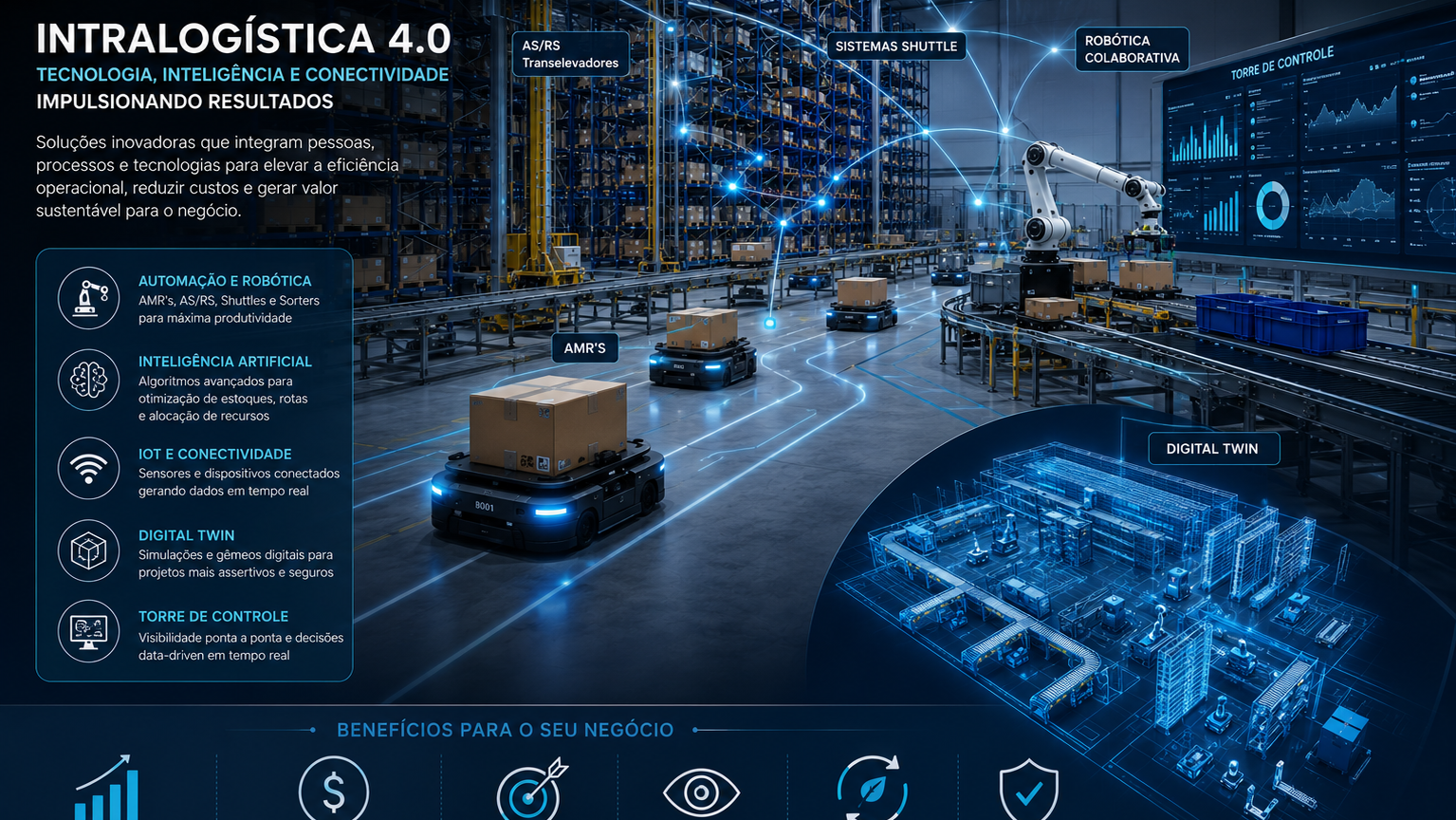
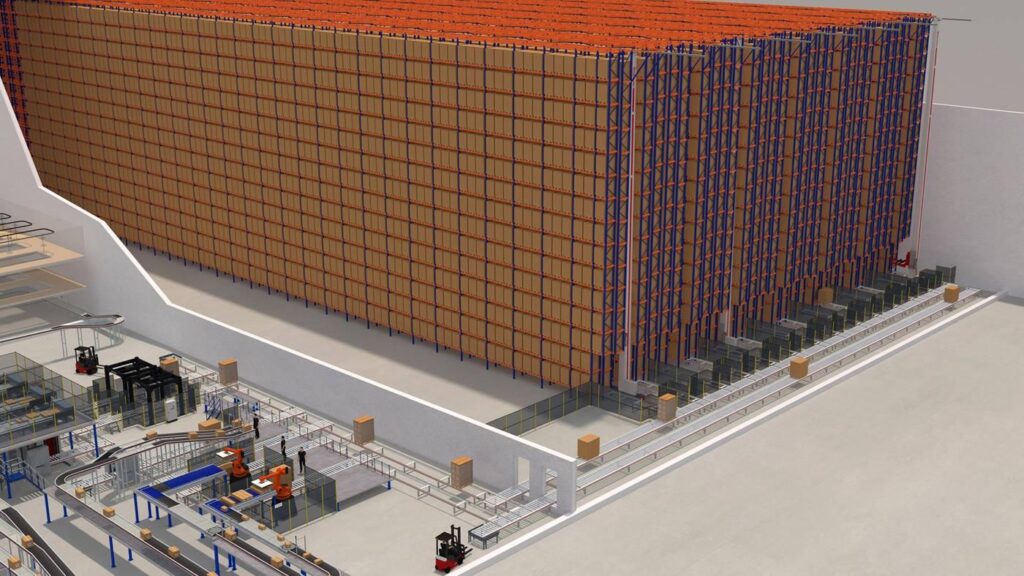
The traditional model of distribution centers and industrial plants, based on predominantly manual processes, is being replaced by highly automated and connected environments. Technologies such as AMRs (Autonomous Mobile Robots), shuttle systems, AS/RS (Automated Storage and Retrieval Systems), Artificial Intelligence, the Internet of Things (IoT), computer vision, and digital twins are redefining how products and information flow throughout the operational chain.
“Technology does not replace operational excellence; it enhances an organization's ability to perform better, faster, and more intelligently. The true competitive advantage lies not in possessing technology, but in knowing how to transform it into business value.”
Among the most significant advancements is the use of autonomous robots capable of moving materials safely and efficiently, thereby reducing unnecessary travel and increasing productivity. Concurrently, advanced artificial intelligence algorithms are being employed to optimize inventory management, order preparation, dynamic resource allocation, and real-time operational planning.
Another important technological milestone is the adoption of Digital Twins—virtual replicas of physical operations that allow for simulating scenarios, validating investments, identifying bottlenecks, and anticipating risks before implementing changes. This approach significantly reduces project risks, improves decision-making, and accelerates the realization of results.
Logistics Control Towers represent another important evolution. By integrating data from ERP, WMS, and WCS systems, IoT sensors, and automated equipment, these platforms provide real-time visibility across the entire operation, enabling rapid responses and more accurate decision-making.
According to Gartner studies, the warehouses of the future will be increasingly driven by software, automation, and artificial intelligence. Similarly, research by McKinsey demonstrates that companies investing in advanced automation and digitalization can achieve significant gains in productivity, reductions in operating costs, and improvements in service levels.
More than just a technological trend, the transformation of intralogistics represents a strategic shift in how companies operate. Organizations that adopt these innovations will be better prepared to face the challenges of an increasingly dynamic, competitive, and customer-experience-driven market.
Conclusion
The technological evolution of intralogistics is creating operations that are smarter, more connected, and more resilient. The combination of physical automation, digital intelligence, and advanced data analytics enables not only increased operational efficiency but also the creation of sustainable competitive advantages. The future belongs to organizations capable of integrating technology, processes, and people into a unified operational transformation strategy.
Leave a comment